30 Sep 2026
Deposit Rhythms and Their Impact on Table Game Durations in Scandinavian Mobile Environments

Deposit rhythms refer to the recurring patterns players exhibit when adding funds to their mobile accounts, and these sequences have drawn attention from analysts tracking table game sessions across Sweden, Norway, and Denmark. Data collected from operators shows that timing, frequency, and amount of deposits correlate with how long users remain engaged in games such as blackjack, roulette, and baccarat on smartphones and tablets. Researchers at several Nordic institutions have examined transaction logs to map these behaviors without relying on personal identifiers.
Patterns Observed in Transaction Data
Studies of mobile transaction records reveal that many users follow predictable deposit cycles, often clustering smaller top-ups during evening hours while spacing larger ones across weekends, and these habits shift session lengths in measurable ways. For instance one analysis of aggregated logs found that players making deposits every twenty to thirty minutes tended to extend table game rounds by an average of fifteen additional minutes per hour compared with those who deposited once at the start. Frequency matters because repeated small additions allow continued play without interruption, whereas single large deposits sometimes lead to quicker exits once the initial balance drops below a threshold.
Operators in the region report similar trends through anonymized dashboards, and figures from 2025 indicate that deposit intervals under fifteen minutes coincided with longer roulette sessions in particular. Blackjack durations showed less variation, yet still increased when deposits arrived in steady increments rather than sporadic bursts. The data does not establish causation on its own, but the statistical associations remain consistent across multiple datasets.
Mobile Infrastructure and Regional Context
Scandinavian markets operate under strict licensing regimes that require real-time reporting of player activity, and this regulatory environment has produced detailed datasets unavailable in many other jurisdictions. Mobile penetration exceeds ninety percent in these countries, which means nearly all table game access occurs through apps rather than desktop platforms. Network stability and payment processor integration further shape how quickly funds appear in accounts, influencing whether a player continues or pauses.
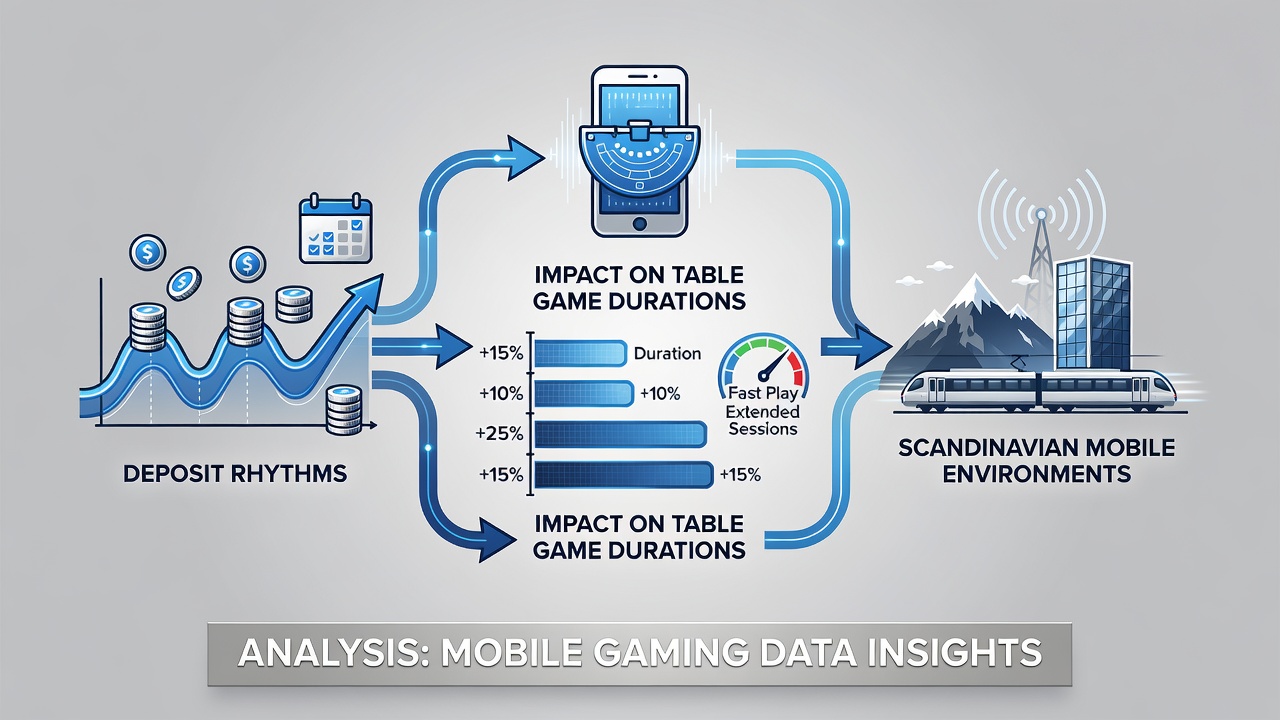
Payment methods common in the area include instant bank transfers and mobile wallets, both of which complete within seconds and support the rapid deposit cycles observed in the logs. A report issued by the Norwegian Gaming Authority in early 2026 documented that seventy-two percent of table game deposits occurred via these instant channels, and sessions involving three or more deposits lasted twenty-eight percent longer on average than single-deposit sessions. Similar patterns appear in Danish records, although the absolute numbers differ slightly due to varying game offerings.
Effects on Specific Table Game Formats
Duration differences emerge most clearly in live dealer formats streamed to mobile devices, where players who deposit at regular intervals remain connected through multiple dealer shuffles. Automated table games display smaller but still detectable extensions when deposit rhythms stay consistent. Analysts note that players using recurring small deposits often cycle through more hands per session, increasing total time spent without necessarily raising overall expenditure.
One dataset covering the first half of 2026 showed that baccarat sessions averaged forty-two minutes when deposits arrived every twenty-five minutes, compared with thirty-one minutes for users who deposited only at the outset. Roulette followed a comparable trajectory, while blackjack remained steadier because many users set loss limits that triggered earlier exits regardless of deposit timing. These observations come from aggregated operator reports rather than controlled experiments, yet they align across independent sources.
According to findings published by the Danish Gambling Authority, deposit frequency also interacts with time-of-day variables, with late-night sessions showing stronger correlations between rhythm and length. The authority's public statistics portal provides further breakdowns by game type and device.
Broader Industry Measurements
International comparisons place Scandinavian mobile patterns alongside data from other regulated markets, and a 2025 study from the Australian Gambling Research Centre found parallel associations between deposit cadence and session length in tablet-based table games. While regulatory frameworks differ, the underlying behavioral signals appear consistent enough to support cross-regional modeling. Observers note that operators adjust interface elements such as deposit prompts to align with observed rhythms, though such adjustments remain within the bounds of existing responsible gaming requirements.
September 2026 brought updated reporting standards across Nordic authorities that now require quarterly summaries of deposit interval distributions, which should yield additional datasets for future analysis. These requirements build on existing transparency rules without introducing new restrictions on player behavior.
Conclusion
Deposit rhythms represent a measurable variable in mobile table game environments throughout Scandinavia, with available transaction data linking deposit frequency and timing to variations in session duration. Regulatory bodies in Sweden, Norway, and Denmark continue to collect and publish aggregated figures that allow ongoing examination of these relationships. Further research drawing on these sources may clarify additional factors that interact with deposit patterns, yet current records already demonstrate consistent statistical associations across multiple operators and game types.